In a world where men walk hand in hand, where are the women who love women?
In a world where men walk hand in hand, where are the women who love women?
I’ve just returned from travelling through Pakistan and Kashmir, and there’s one image I can’t get out of my head: two men sitting shoulder to shoulder on a roadside bench, arms draped comfortably around one another. Another pair walked past me hand in hand, laughing freely, their intimacy drawing no stares, no shame.
This, to me as a queer woman, was both beautiful and disorienting. In the West, it’s rare to see men walk hand in hand or openly embrace physical touch. Yet in the East, that level of closeness is ordinary, as if it’s woven into the fabric of daily life.
But in that same space of acceptance, something else was missing or completely absent, in fact. I did not see women holding hands in affection. I did not see physical touch or intimacy between women in the way I saw it so openly between men and I definitely did not hear even a whisper of lesbians existing.
It was as if we didn’t exist at all.
Ever since I was young, I remember hearing about queer stories in South Asia. Learning about the Hijra community a distinct and historically recognised third gender. Many Hijras are assigned male at birth but live as women, while others reject both male and female genders. Hijras have been recognised for centuries, sometimes even praised as blessed people, believed to hold spiritual powers. Despite having been marginalised and mocked, they are nonetheless still visible. People know who they are, and they are given space, even if that space is tightly controlled.
The more I studied them, the more I envied them. Why couldn’t lesbians be given acknowledgement? Why do people act like we do not exist? Why do men always have it somewhat easier than women?
These questions, and many more, often circled my mind and tied small knots around my heart. The pain of knowing I would never truly be accepted hurt.
Then there’s the open male-to-male closeness normalised in ways that feel almost utopian to me. They can walk hand in hand, sit pressed against each other, and show affection without the immediate assumption of romance or sexuality.
And yet, for women, the silence is deafening.
Where are the women who love women? Where are the girls who, like me, once stared too long at another girl in school, heart racing with feelings they couldn’t name? Where are the couples who carve out secret lives, who resist the stories they were told to live?
The truth is, they exist but are hidden so carefully that the wider culture denies their very existence.
So, the easiest solution? Pretend it doesn’t exist. Silence it before it’s spoken.
A double silence is embedded in the fabric of South Asian societies, one that feels almost suffocating. First, there is the silence surrounding queerness: an unspoken truth in a conservative world that pretends it doesn’t exist. There is the silence imposed on women, a silence that’s both reverent and resentful. Women are held in high regard for their accomplishments, their strengths, and their beauty; but beneath the admiration there is often a deep, simmering discomfort.
The very power women carry is seen as a challenge to the patriarchal order, something that must either be controlled or diminished.
It’s like men in these cultures cannot handle the thought of women having too much freedom or influence. There is something about it that feels threatening to the whole structure they rely on, and when you add the silence around queerness into the mix, lesbians are expected to fade into the background. It’s not that we do not exist; it’s that a world shaped by fear of female power refuses to acknowledge us.
Living with the feeling of being erased before the conversation begins
As a South Asian lesbian myself, walking through the streets of cities in Pakistan, I felt like I was both everywhere and nowhere. I could sense the love between men, see the space carved out for Hijras, yet when I searched for reflections of myself, I found none.
I thought about my teenage self the girl who cut her hair short, who dressed in baggy jeans, who couldn’t explain why she was mesmerised by her female teachers, why she always noticed women more than men. I wondered what would have happened if I had grown up not in the UK, but in Lahore, or Srinagar, or Islamabad. Would I even have had the language to name myself? Or would I have been folded into silence, taught that what I felt didn’t exist?
Because that’s the cruellest form of erasure: not even to be condemned, but to be erased before the conversation begins.
Of course, I know that lesbians do exist in Pakistan and Kashmir. They exist in the quiet glances exchanged at weddings, in the friendships that blur into something deeper, in the secret lives sustained behind closed doors. They exist in whispered conversations, in coded online groups, in the courage of those who risk everything to live authentically.
But their existence is often so private, so deeply hidden, that for the majority of society they are invisible.
When people are erased from the public imagination, they lose not only representation but also the possibility of recognition. If you’re not seen, how can you be acknowledged? If you’re not acknowledged, how can you be safe?
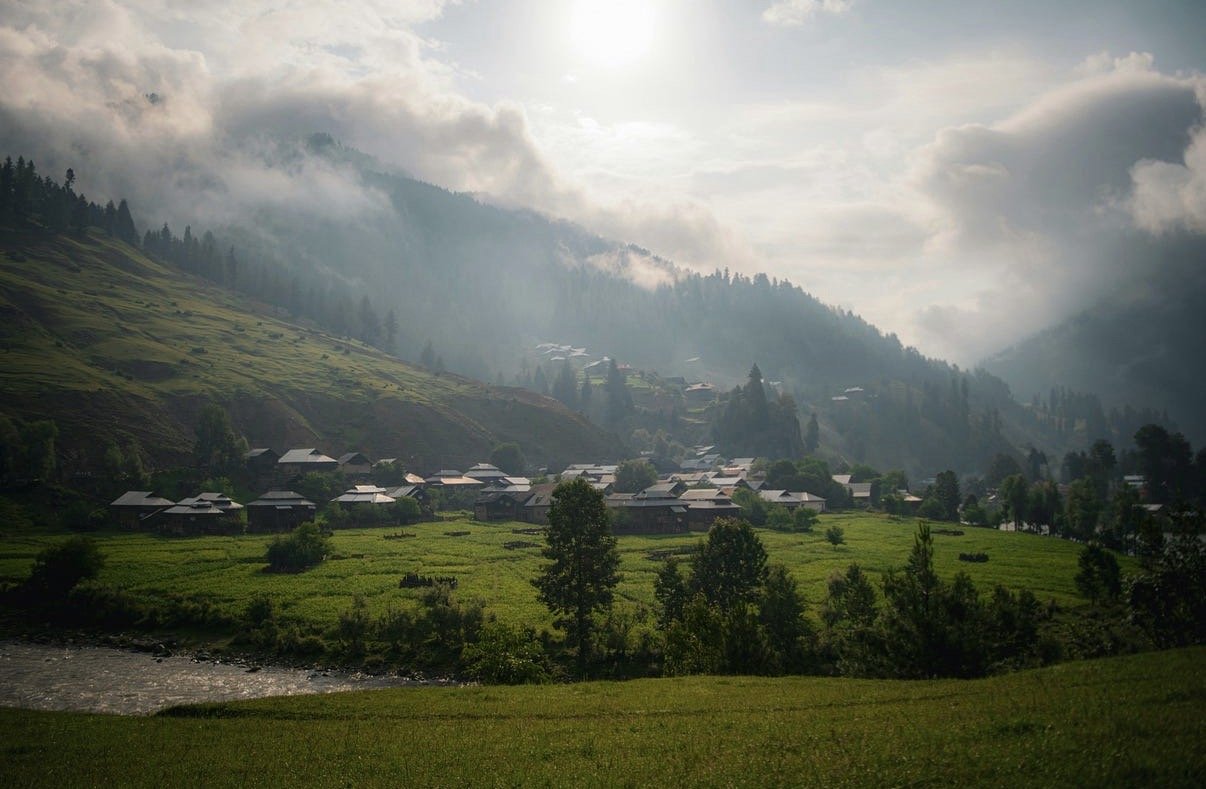
As I moved through these landscapes through the bazaars of Pakistan, through the mountains of Kashmir, I felt both awe and grief. Awe at the resilience of queer lives that do exist despite erasure. Grief at the silence that continues to swallow women like me whole.
Travelling there reminded me why telling these stories matters. Because silence breeds invisibility, and invisibility breeds isolation. And sometimes, the most radical act is simply to say out loud: We are here. We exist.
When I left Pakistan, I carried with me the memory of men walking freely hand in hand, of the Hijra communities moving through the streets with their unique place in society. But underneath everything, I carried this quiet ache, a deep, lingering sadness for the absence, the silence where lesbian lives, voices, and love should have been. I felt that emptiness like a shadow always just behind me.
We are hidden in plain sight, searching for visibility in a region that has not yet made space for us.
And maybe my writing, my voice, my story, is one small way to begin breaking that silence.